
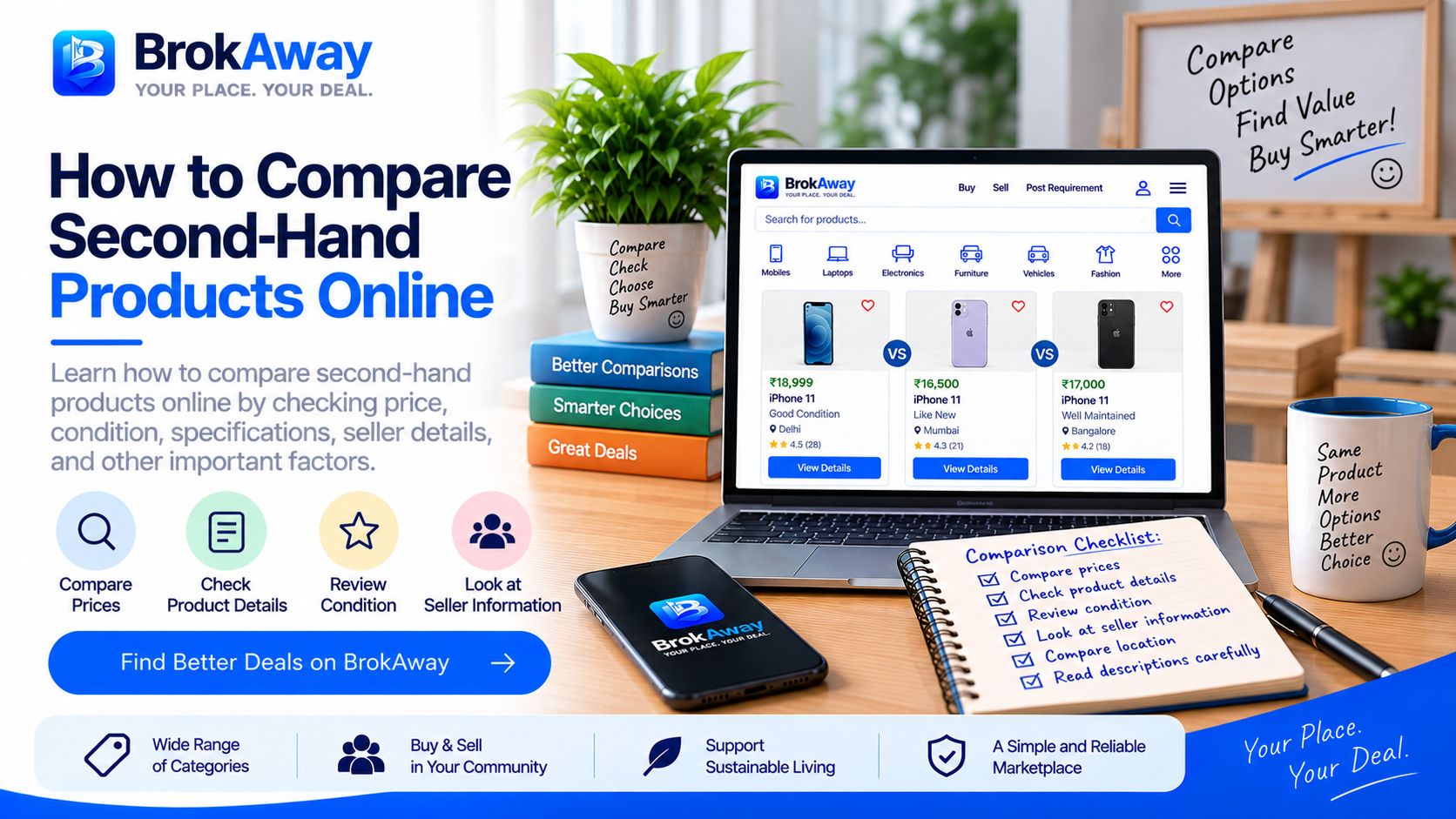
How to Judge the Value of a Used Product Before Buying
Learn how to judge the value of a used product by looking at its age, condition, specifications, usage, accessories, repair history, and current asking price.
Buying a used product online can give you access to items that may no longer be available as new or that fit a different budget. But before making a decision, it is useful to understand what you are actually getting for the asking price.
The value of a used product depends on several factors. Its age, condition, model, specifications, usage history, accessories, repairs, and current market demand can all make a difference.
Instead of looking only at the seller's asking price, take some time to understand the product itself and the factors that may affect its value.
Understand the Product First
Start by identifying exactly what is being offered.
Check the:
- Brand - Model - Variant - Age - Specifications - Product type - Included accessories
A clear understanding of the product makes it easier to judge whether the asking price makes sense.
Check How Old the Product Is
Age can have a significant effect on the value of a used item.
An older phone, laptop, appliance, or other product may have a lower value than a newer version, even when both are from the same brand.
Ask when the product was purchased and how long it has been in use.
However, age should not be considered on its own. A well-maintained older product may still be useful, while a newer product with heavy usage may require more attention.
Look at the Current Condition
Physical and functional condition can affect the value of a used product.
Check for:
- Scratches - Dents - Cracks - Stains - Missing parts - Signs of heavy use - Functional problems
For electronic products, important features should work as expected.
For furniture, check the structure and visible condition.
For appliances, check whether the main functions work properly.
The condition gives you useful context when judging value.
Consider the Product's Specifications
Specifications help determine whether a used product still meets current requirements.
For electronics, this might include storage, RAM, processor, display, battery, camera, connectivity, or other relevant features.
For furniture, dimensions and material may be more important.
For appliances, capacity, model, and features can help determine usefulness.
The specifications should match your actual requirements rather than simply looking impressive on paper.
Check How Much the Product Has Been Used
Usage history can provide additional context.
Two products of the same age may have experienced very different levels of use.
Ask the seller:
- How long was it used? - Was it used regularly? - Was it used at home or for business? - Has it been stored for a long period? - Were any major parts replaced?
The answers may help you understand the current state of the product.
Look for Repair or Replacement History
Previous repairs can influence the value of a used product.
A repaired product is not necessarily a bad purchase, but you should know what was repaired.
For example, an electronic device may have had a battery, screen, storage component, or other part replaced.
For appliances and vehicles, service or repair history can also provide useful context.
Consider Included Accessories
Accessories can add practical value to a used product.
Check whether the listing includes items such as:
- Original charger - Cables - Remote control - Original box - Manuals - Cases - Stands - Additional components
A product with important accessories may be more convenient than another listing that includes the main item only.
Compare the Asking Price With Similar Products
Although this article is not about choosing the cheapest listing, price is still an important part of judging value.
Look at similar products and consider differences in:
- Age - Condition - Model - Specifications - Accessories - Location
A product that costs more may provide additional value because it is newer, better maintained, or more complete.
A lower-priced product may need repairs or replacement accessories.
Think About Future Expenses
A used product can sometimes require additional spending after purchase.
Depending on the product, possible expenses may include:
- Repairs - Replacement parts - Accessories - Installation - Transportation - Maintenance
Consider these factors before deciding whether the asking price represents good value for your needs.
Check Whether the Product Is Still Relevant
Technology and product models can change over time.
An older product may still work well but may no longer support newer software, accessories, features, or standards.
For electronics, check whether the specifications are still suitable for your intended use.
For appliances and other products, consider whether the model remains practical for your requirements.
Ask the Seller Useful Questions
If the listing does not provide enough information, ask questions before making a decision.
Useful questions can include:
- When was it purchased? - How long has it been used? - Has it been repaired? - Are all important features working? - What accessories are included? - Are there any known issues? - Is any warranty remaining? - Why is the product being sold?
Clear answers can help you understand the product beyond the photographs and headline price.
Do Not Judge Value From Photos Alone
Photos can show appearance, but they cannot always tell you how a product performs.
A product may look excellent in photographs while having functional issues that are not visible.
For expensive products, consider inspecting the item and verifying important information before completing a transaction.
Value Depends on Your Requirements
There is no single value that works for every buyer.
A product may be worth considering for one person because of its specifications or condition, while another buyer may prefer a newer model.
Think about what you actually need from the product.
For example, an older laptop may be suitable for basic tasks but less suitable for demanding software.
A used piece of furniture may be useful if its dimensions and condition match your space.
Your requirements should be part of the value assessment.
Evaluating Used Electronics
When judging the value of a used phone, laptop, camera, or other electronic product, consider:
- Exact model - Age - Specifications - Battery condition - Physical condition - Repair history - Accessories - Warranty - Asking price
Compare these factors rather than focusing on the price alone.
Evaluating Used Furniture
For furniture, consider:
- Material - Dimensions - Construction - Age - Design - Condition - Visible wear - Repairs - Location
A lower-priced item may not be practical if it requires significant repair or transportation costs.
Evaluating Used Appliances
For appliances, look at the brand, model, age, capacity, working condition, repair history, and available accessories.
Also consider whether the appliance still meets your requirements.
Evaluating Used Vehicles
Vehicles require additional verification.
Consider the:
- Make - Model - Year - Variant - Usage - Condition - Service history - Repairs - Location - Available documentation
Important vehicle information and documents should be independently verified before completing a transaction.
Using BrokAway to Discover Used Products
BrokAway is an online marketplace where users can discover new and second-hand products across multiple categories.
Users can explore mobiles, electronics, cameras, furniture, vehicles, appliances, books, sports products, fashion, home and garden items, tools, and other listings.
Sellers can also list products they no longer need and provide details about their condition, specifications, location, and asking price.
What If You Cannot Find the Right Product?
Sometimes the product you need may not be available in the listings you find.
BrokAway also allows users to post a requirement.
You can describe:
- What product you need - Preferred brand or model - Budget - Condition preference - Location - Other important requirements
This gives you another way to communicate what you are looking for.
A Simple Used Product Value Checklist
Before deciding whether a used product is worth considering, check:
- Exact product and model - Age - Condition - Specifications - Usage history - Repair history - Included accessories - Warranty information - Similar product prices - Possible additional expenses - Location - Your actual requirements
Final Thoughts
Judging the value of a used product involves more than comparing prices.
Age, condition, specifications, usage, repairs, accessories, warranty information, and possible future expenses can all affect how useful a product may be for you.
Take time to understand the product, ask relevant questions, and verify important information before making a transaction.
BrokAway gives users a place to discover new and second-hand products across different categories and explore listings according to their requirements.
BrokAway — YOUR PLACE. YOUR DEAL.
Disclaimer: Brokaway is a marketplace platform that connects users to discover products and services. Brokaway does not guarantee the quality, authenticity, availability, pricing, or completion of any transaction. Users should independently verify all relevant details before making any transaction.