
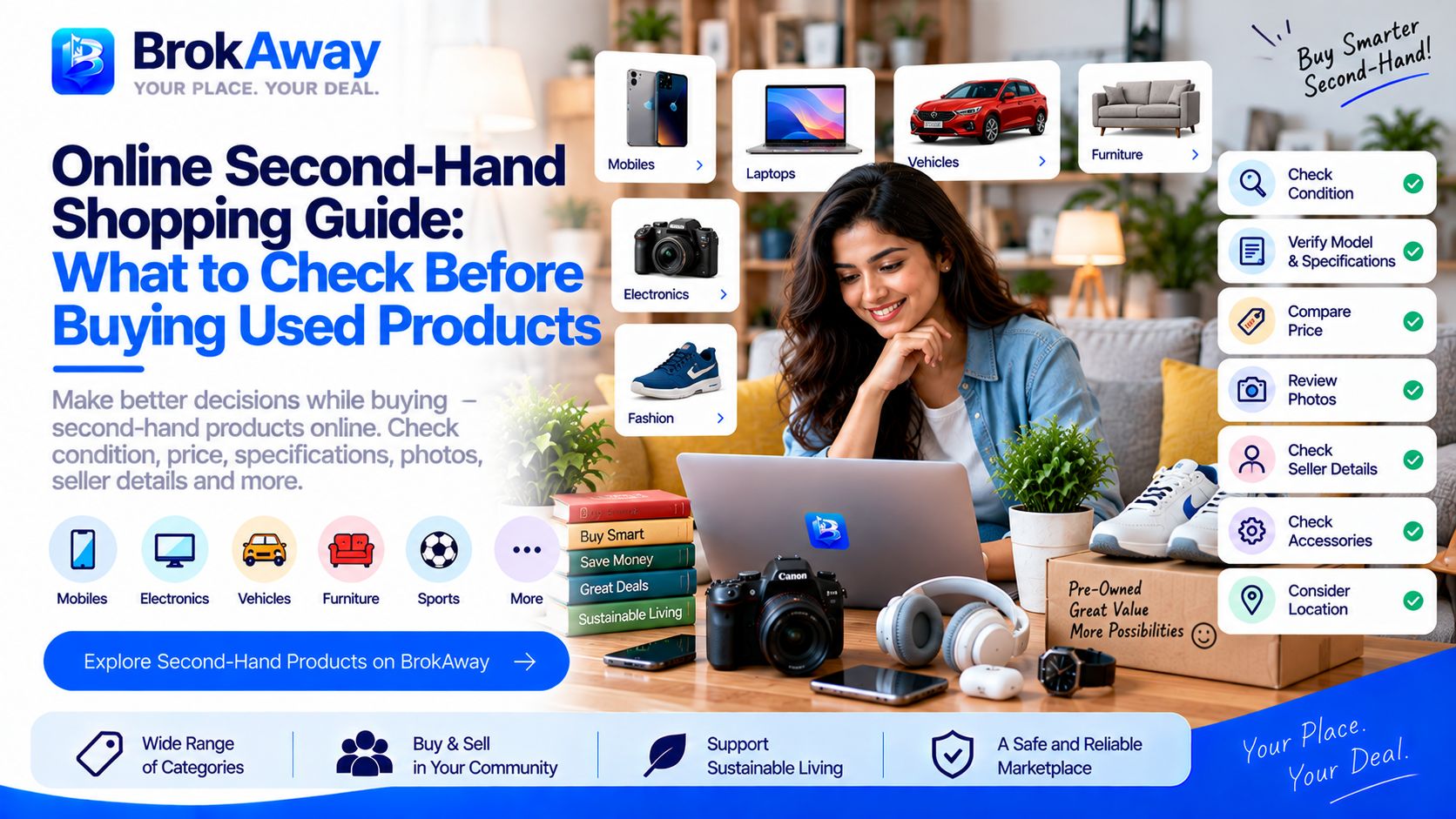
How to Plan Your Second-Hand Shopping Before Buying Online
Discover how to plan a second-hand shopping search by defining your requirements, setting a budget, identifying suitable products, researching options, and preparing questions before contacting a seller.
Buying used products online can be easier when you know exactly what you are looking for before you start browsing. Instead of opening random listings and making a quick decision, a simple shopping plan can help you stay focused on your requirements.
Whether you are searching for electronics, furniture, books, appliances, fashion items, sports equipment, or other used products, planning your search can help you use your time more effectively.
The goal is not simply to find the lowest-priced item. It is to identify products that match your needs, budget, preferred condition, and practical requirements.
Start With a Clear Requirement
Before searching, write down what you actually need.
For example, if you want a used laptop, think about:
- Preferred brand - Model or model range - Storage requirement - RAM requirement - Intended use - Budget - Preferred condition - Location
A clear requirement makes it easier to ignore listings that do not match what you need.
Set a Realistic Budget
Decide how much you are comfortable spending before you start browsing.
Your budget can help narrow the number of listings you consider. However, avoid choosing a product based only on the lowest available price.
A very low-priced item may have an older model, missing accessories, visible damage, or other limitations.
Keep a small range rather than focusing on one exact number.
Decide Between New and Used
Before choosing a second-hand product, consider why you want to buy used.
You may be looking for:
- A specific older model - A lower purchase cost - A product for temporary use - A spare item - A product that is no longer easily available new
Knowing your reason for buying used can help you decide what compromises, if any, are acceptable.
Choose the Right Product Category
Start your search in the category that matches your requirement.
For example:
- Mobiles for smartphones - Electronics for devices and accessories - Furniture for tables, chairs, beds, and other furnishings - Books for used books - Sports for sports equipment - Appliances for household appliances - Vehicles for cars, bikes, and other vehicles
Category-based searching can reduce unrelated results and make browsing more focused.
Research the Product Before Searching
If you are unfamiliar with the product, learn about its basic specifications first.
For electronics, understand the important specifications that affect everyday use.
For furniture, understand the size and material you need.
For appliances, identify the capacity and features that matter.
For books, know the required title and edition.
Basic product knowledge helps you understand listings more easily.
Decide Which Features Matter Most
Not every feature has equal importance.
Create a short list of must-have features and optional features.
For example, when looking for a smartphone, you might consider storage and battery condition essential while treating colour as a preference.
This makes it easier to evaluate listings based on what actually matters to you.
Consider Product Age
Used products can have very different ages.
Before buying, consider how old the product is and whether its age fits your intended use.
An older product may still be useful, but it could have shorter remaining software support, more wear, or older technology.
Ask the seller about the purchase date when it is relevant.
Think About How Long You Need It
Your expected usage period can affect your buying decision.
If you only need a product for a short period, an older used item may meet your needs.
If you plan to use it for several years, you may prefer a newer model with more current specifications.
Think about your intended usage before choosing a listing.
Prepare Questions Before Contacting Sellers
Having questions ready can make seller communication easier.
Depending on the product, you might ask:
- How long has the item been used? - When was it purchased? - Are there any known issues? - Has it been repaired? - What accessories are included? - Is the original purchase information available? - Why is it being sold?
Specific questions are generally more useful than simply asking whether the product is “good.”
Review Listing Photos Carefully
Photos can help you understand the appearance and condition of a used product.
Look for:
- Visible damage - Scratches - Dents - Missing parts - Signs of wear - Actual product photographs
If important areas are not visible, ask the seller for additional photographs where appropriate.
Read the Full Listing
Do not rely only on the title and first photograph.
Read the description carefully for information about:
- Condition - Age - Specifications - Accessories - Location - Repairs - Known issues - Seller expectations
Important details may be included in the description rather than the headline.
Keep Location in Mind
Location can matter for products that are difficult or expensive to transport.
Furniture, appliances, bicycles, and other larger items may be easier to buy locally.
If the product needs physical inspection, local listings may also make the process more practical.
Consider Additional Costs
Your shopping budget should not always be limited to the listing price.
Depending on the product, you may also need to consider:
- Delivery - Transportation - Installation - Repairs - Replacement accessories - Maintenance
A product with a lower asking price may require additional spending after purchase.
Do Not Rush Because of a Low Price
A low asking price can be attractive, but it is worth understanding why the item is priced that way.
Ask whether the lower price is related to:
- Age - Condition - Missing accessories - Repairs - Older specifications - Seller's circumstances
The price should be considered together with the product's details.
Make a Shortlist
Instead of contacting every seller, create a small shortlist of listings that match your main requirements.
For each option, note:
- Product model - Condition - Age - Price - Location - Accessories - Important issues
This can make the decision-making process more organized.
Use a Simple Comparison Method
Once you have a shortlist, compare the products using the factors that matter most to you.
For example:
Product A may be newer but more expensive.
Product B may be older but include more accessories.
Product C may be closer to your location.
There may not be one option that is perfect in every category. Your requirements should determine which differences matter most.
Consider Physical Inspection
For higher-value or condition-sensitive products, physical inspection can be useful where practical.
Check important functions and physical details before completing a transaction.
For electronics, test major features.
For furniture, inspect the structure and dimensions.
For appliances, check the main functions.
For vehicles, independently verify important details and documents.
Keep Important Information Organised
When contacting several sellers, save the information you receive.
You can keep notes about:
- Price - Condition - Model - Seller responses - Location - Accessories - Repairs - Other relevant details
This can help prevent confusion when multiple listings look similar.
Planning Second-Hand Shopping on BrokAway
BrokAway is an online marketplace where users can discover new and second-hand products across different categories.
You can browse mobiles, electronics, vehicles, furniture, fashion, books, sports products, appliances, home and garden items, tools, and other listings.
A planned search can make it easier to focus on products that match your requirements rather than browsing without a clear goal.
What If Your Required Product Is Not Listed?
Sometimes the exact product you want may not be available.
Instead of repeatedly searching, you can post a requirement on BrokAway.
Include details such as:
- Product type - Preferred brand - Model - Budget - Condition preference - Location - Other important requirements
This gives sellers and other users a clearer idea of what you are looking for.
A Simple Second-Hand Shopping Plan
Before contacting a seller, go through this checklist:
- Define the product you need - Choose the relevant category - Set a budget range - Identify important specifications - Decide your preferred condition - Consider product age - Research the model - Review listing photographs - Read the full description - Prepare questions - Consider location - Consider additional costs - Shortlist suitable listings - Verify important details before completing the transaction
Final Thoughts
A good second-hand shopping experience starts before you contact a seller.
Knowing what you need, setting a realistic budget, understanding the product, identifying important features, reviewing listings carefully, and preparing questions can make the search more organised.
The objective is not simply to find a used product quickly. It is to find an option that fits your requirements and budget while giving you enough information to make your own decision.
BrokAway provides a marketplace where users can discover new and second-hand products across multiple categories and post requirements when they cannot find what they are looking for.
BrokAway — YOUR PLACE. YOUR DEAL.
Disclaimer: Brokaway is a marketplace platform that connects users to discover products and services. Brokaway does not guarantee the quality, authenticity, availability, pricing, or completion of any transaction. Users should independently verify all relevant details before making any transaction.