
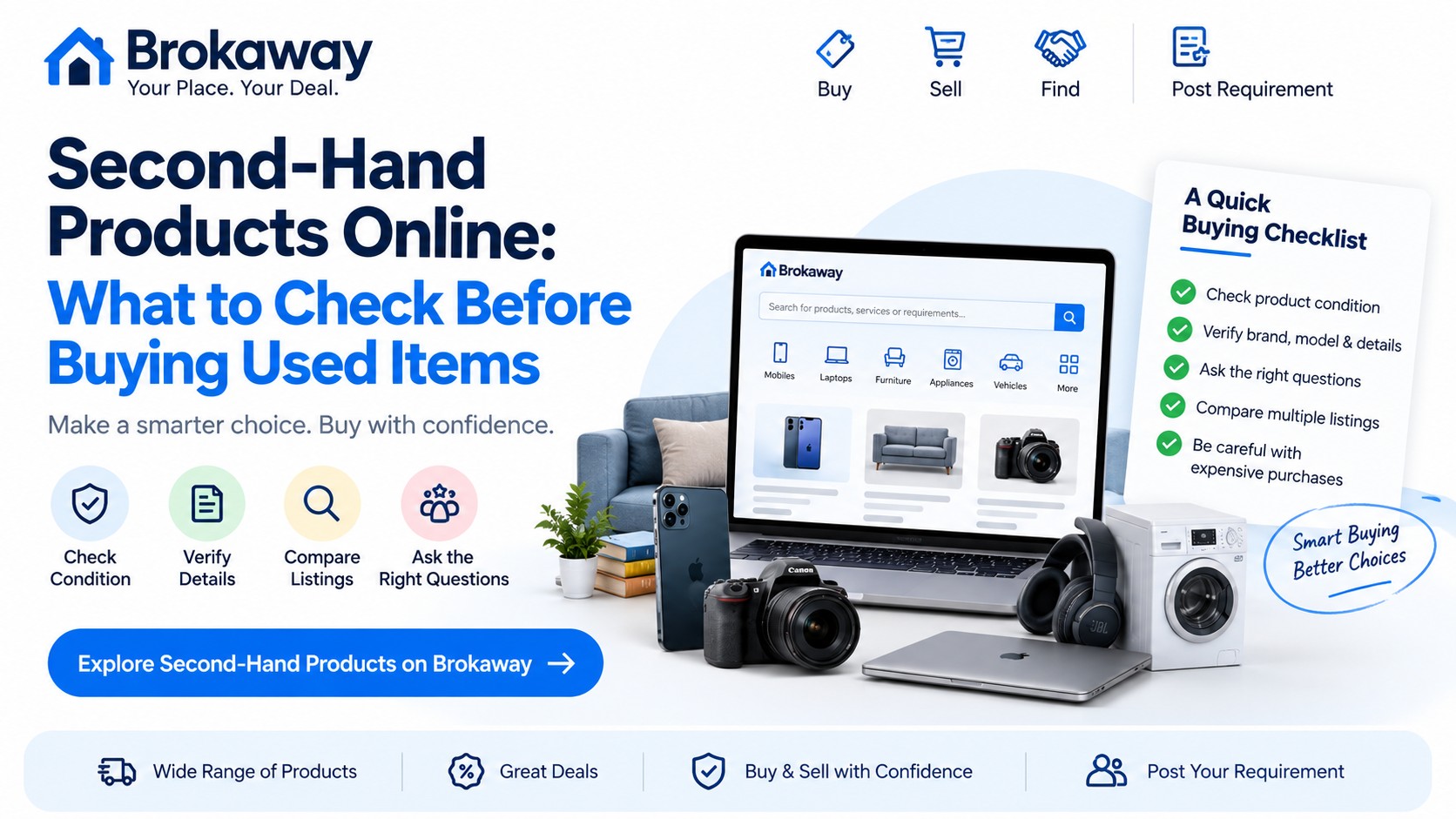
How to Check the Price of Second-Hand Products Before Buying
Learn how to evaluate the price of second-hand products before buying, including condition, age, specifications, accessories, market comparisons, and factors that can affect the value of used items.
Buying a second-hand product can be a practical way to find useful items at a price that fits your budget. But before deciding whether a used product is worth its asking price, it helps to understand what affects its value.
The price of a second-hand mobile phone, laptop, camera, furniture item, appliance, vehicle, or other product can vary depending on its age, condition, model, specifications, accessories, usage, and current demand.
Instead of looking at the asking price alone, buyers can compare several factors to understand whether a listing represents reasonable value.
Why Second-Hand Product Prices Vary
Used products do not all lose value at the same rate.
Two products of the same brand can have different prices because of differences in:
- Age - Condition - Model - Specifications - Usage - Repairs - Accessories - Warranty status - Original purchase information - Current market demand
This is why comparing similar listings can be more useful than judging a price in isolation.
Check the Product's Age
Age is one of the factors that can influence the value of a used product.
A newer model may have a higher asking price than an older model from the same brand. However, age should not be considered alone.
A well-maintained older product may still be useful, while a newer product with heavy usage or damage may require more consideration.
Ask the seller when the product was purchased and how long it has been used when that information is relevant.
Compare the Exact Model and Specifications
The exact model can make a significant difference in pricing.
For electronics, compare details such as:
- Storage capacity - RAM - Processor - Display - Camera specifications - Battery capacity - Connectivity features
For other products, identify the specifications that directly affect usefulness and value.
Comparing the exact model rather than only the brand name can give you a more meaningful price reference.
Consider the Product's Condition
Condition can have a direct effect on what a used product may be worth.
Look for:
- Scratches - Dents - Cracks - Wear - Missing parts - Functional problems - Repairs - Replaced components
A product in excellent condition may have a different asking price from an otherwise similar product showing significant wear.
When comparing listings, make sure you are comparing products with reasonably similar conditions.
Check Included Accessories
Accessories can also affect the overall value of a used product.
For example, a device may come with its original charger, box, cables, case, manuals, or other accessories.
A furniture item may include additional components, while sports equipment may include supporting accessories.
Check exactly what is included before comparing one listing with another.
Compare Multiple Listings
One of the simplest ways to understand a second-hand product's asking price is to compare similar listings.
Look for products with similar:
- Model - Age - Condition - Specifications - Accessories - Location
Comparing several listings can give you a broader view of the prices being asked for similar products.
Do not compare a heavily used item directly with a nearly unused one and assume their prices should be identical.
Understand Depreciation
Most products lose some value after being used, but depreciation varies by category.
Some products may lose value quickly when newer models are released. Others may retain value for longer because they remain useful or have consistent demand.
When evaluating a used product, consider how old it is compared with newer versions and whether the product has become outdated.
Check Whether Repairs Affect Value
Previous repairs can be important when evaluating a used product.
A repaired item is not automatically a poor choice, but buyers should understand what was repaired and whether any components were replaced.
For electronics, ask about screen replacements, battery changes, motherboard repairs, or other major work where relevant.
For vehicles and appliances, repair history may also be useful when evaluating the asking price.
Consider Warranty Information
If a used product still has a valid manufacturer or seller warranty, this may be relevant when comparing its price with similar listings.
Check what the warranty covers, whether it is transferable, and how long it remains valid.
Do not assume that every warranty automatically transfers to a new buyer.
Look at the Asking Price in Context
An asking price is simply the amount a seller is requesting.
It does not necessarily tell you the final value of the product.
Consider the product's condition, age, specifications, accessories, location, and comparable listings before deciding whether the asking price appears reasonable.
This approach can help you avoid judging a product only by whether the number looks low or high.
Consider Location and Additional Costs
The listed price may not always represent the total cost of getting the product.
Depending on the product, there may be additional costs related to:
- Delivery - Pickup - Transportation - Installation - Repairs - Accessories - Replacement parts
For larger products such as furniture or appliances, location and transportation can be particularly relevant.
Ask Questions Before Making a Decision
If important pricing information is missing, ask the seller before making a decision.
Useful questions may include:
- When was the product purchased? - How long has it been used? - Are there any known issues? - Has it been repaired? - Which accessories are included? - Is the original bill or purchase information available? - Is any warranty remaining? - Why is the product being sold?
The answers can provide additional context for evaluating the asking price.
Be Careful With Extremely Low Prices
A very low asking price may attract attention, but it is still important to understand why the product is priced that way.
Possible reasons may include:
- Visible damage - Missing accessories - Older model - Repair requirements - Urgent sale - Limited functionality
The reason behind a low price can be as important as the price itself.
Evaluating Used Electronics
For phones, laptops, cameras, and other electronics, compare the exact model and specifications before looking at price alone.
Battery condition, storage, physical condition, accessories, repairs, and warranty status can all affect how different listings compare.
A lower-priced device may not represent better value if it requires significant additional spending.
Evaluating Used Furniture
For furniture, price should be considered alongside material, size, design, age, condition, and construction.
Two visually similar pieces can have different values because of differences in material, dimensions, quality, or condition.
Always check measurements before deciding whether the asking price fits your requirements.
Evaluating Used Appliances
When comparing used appliances, consider the brand, model, age, working condition, capacity, physical condition, and repair history.
Older appliances may have a lower asking price but could require maintenance or replacement parts.
Understanding the overall condition can help put the asking price into context.
Evaluating Used Vehicles
Vehicles involve many factors that can affect value, including:
- Make and model - Year - Variant - Usage - Condition - Service history - Repairs - Location - Documentation
Buyers should independently verify important vehicle details and documents rather than relying only on the information in an online listing.
Using BrokAway to Compare Options
BrokAway is an online marketplace where users can discover new and second-hand products across different categories.
You can explore listings for mobiles, electronics, cameras, furniture, vehicles, appliances, books, sports products, home and garden items, and other products.
When comparing listings, users can review the available product information, asking prices, condition, location, and other relevant details.
Sellers can also list products they no longer need and provide information that helps potential buyers understand the item.
What If You Cannot Find a Suitable Price or Product?
Sometimes you may not find the exact product or price range you are looking for.
In that situation, you can post a requirement on BrokAway and describe the product you need, your preferred budget, location, condition preference, and other relevant details.
This gives you another way to communicate what you are looking for instead of relying only on existing listings.
A Simple Second-Hand Price Checklist
Before deciding whether a used product is worth considering, check:
- Product age - Exact model - Specifications - Physical condition - Functional condition - Repair history - Included accessories - Warranty information - Comparable listings - Location - Additional costs - Seller-provided information
Final Thoughts
The price of a second-hand product depends on more than a single number.
Age, condition, specifications, usage, repairs, accessories, warranty status, location, and comparable listings can all provide useful context when evaluating an asking price.
Instead of choosing a used product simply because it appears cheap, compare the details and consider what you are actually getting for the amount being requested.
BrokAway gives buyers a place to discover different new and second-hand products, compare available listings, and explore options based on their requirements.
BrokAway — YOUR PLACE. YOUR DEAL.
Disclaimer: Brokaway is a marketplace platform that connects users to discover products and services. Brokaway does not guarantee the quality, authenticity, availability, pricing, or completion of any transaction. Users should independently verify all relevant details before making any transaction.